
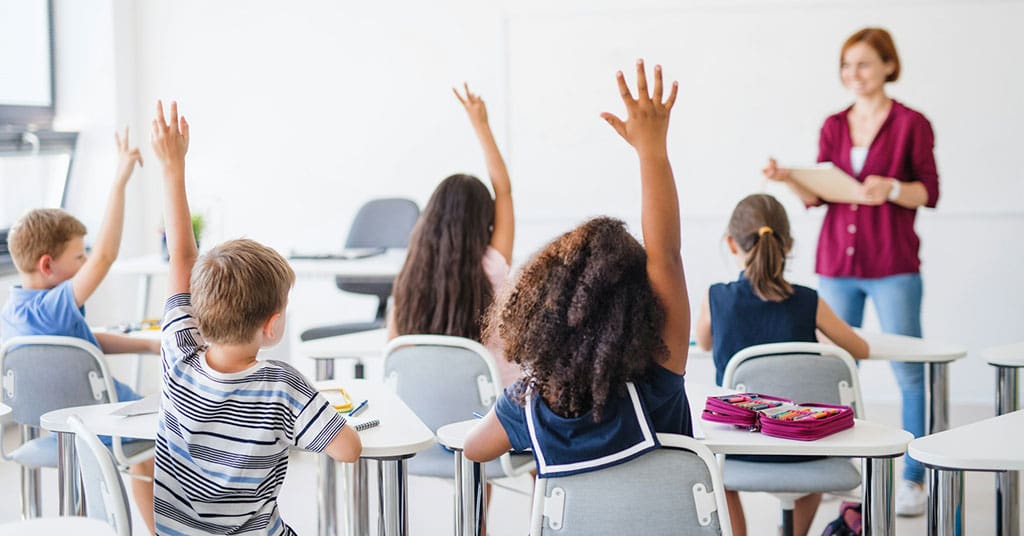
Civility in schools isn’t about being strict. It’s about maintaining order and respect

In Quebec, a new provincial regulation states that students must address their teachers as “vous” rather than “tu.”
It’s a significant change when you realize that the pronoun vous is a more formal way of addressing a person. Not only that, but Quebec students will also be required to refer to their teachers as Mr. or Ms.
In other words, teachers and students won’t be on a first-name basis in Quebec schools. Students will use formal titles in addressing teachers. After all, teachers are authority figures in school, not their students’ buddies. Formalizing the language is an important step in supporting the authority needed for education to take place.
Other provinces, including Manitoba, would do well to emulate Quebec’s example. While most Manitoba schools currently expect students to address their teachers by title and last name, this practice isn’t universal. Being on a first-name basis with students sends the unfortunate message that there’s no difference between the roles of teacher and student.
Of course, there’s a huge distinction between a teacher and a student. Teachers are well-educated professionals who are entrusted with ensuring that students master the required curriculum content. Thus, it’s reasonable for teachers to expect students to show them appropriate respect.
Unfortunately, there’s been a push in some education circles to turn teachers into mere learning facilitators. However, teachers do much more than just facilitate learning; they must take active charge of their classrooms. This means giving more whole-class instruction, setting clear behavioural expectations for students, and creating quality tests and assignments.
Simply put, teachers are paid to teach, and this will only happen in an environment where students respect their teachers. This is far more likely to happen when there is a reasonable amount of professional separation between teachers and students.
This doesn’t mean teachers cannot be friendly with students. However, there’s a huge difference between being friendly and becoming friends with students. If a teacher wants to develop a personal friendship with a student, he should wait until after that student graduates from high school. Only then is it appropriate to be on a first-name basis.
It becomes even more problematic when teachers fail to maintain appropriate boundaries between themselves and their students. Sending personal text messages to students, sharing social media posts with them, and using inappropriate language around students are all surefire ways to undermine teacher professionalism.
Interestingly, students are far more likely to respect teachers who keep a professional distance. Trying to win over students by being their friend will only make it harder for teachers to do their jobs properly. Once that respect is lost, it’s nearly impossible to regain.
Even if the Manitoba government chooses not to follow Quebec’s example, there’s much that school trustees, superintendents, and principals can do to promote civility in schools. School leaders should remind teachers about the importance of professional boundaries. Let students know that they are to treat teachers as authority figures—not as personal buddies.
And if any students refuse to respect their teachers, it’s important to intervene immediately with firm discipline. Don’t let students get away with disrespecting teachers. If you ignore this problem, it will only become worse.
All schools would benefit from more civility in the classroom. Respect is a non-negotiable item.
Michael Zwaagstra is a senior fellow with the Frontier Centre for Public Policy.
Explore more on Education reform, Parental rights, Civil society
The views, opinions, and positions expressed by our columnists and contributors are solely their own and do not necessarily reflect those of our publication.
Troy Media empowers Canadian community news outlets by providing independent, insightful analysis and commentary. Our mission is to support local media in helping Canadians stay informed and engaged by delivering reliable content that strengthens community connections and deepens understanding across the country.

