
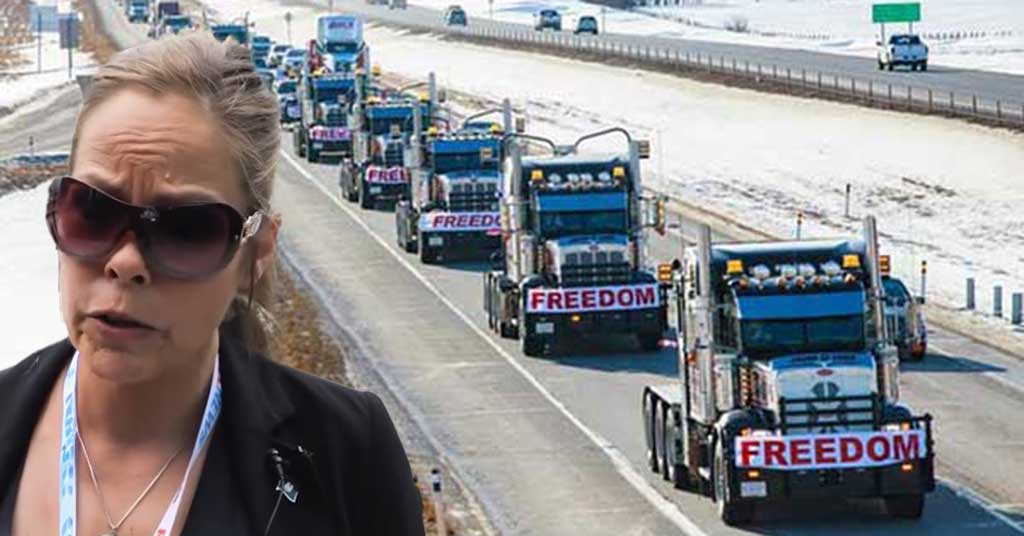
Before passing judgment, read what Tamara Lich has to say for herself
Few events in recent Canadian history have generated as much division as the 2022 Freedom Convoy. Canadians have spent the past four years hearing what governments, politicians, police, judges and much of the media thought about it. Far fewer have heard directly from one of the people who helped organize the protest.
That is why Tamara Lich’s memoir, Hold the Line: My Story from the Heart of the Freedom Convoy, deserves attention.
Lich, an Alberta Métis grandmother, became one of the Freedom Convoy’s most recognizable organizers and public faces. In Hold The Line, she tells her side of the story.
While memoirs rarely settle historical debates, their value lies in allowing readers to judge an event through the eyes of someone who experienced it.
The book’s title reflects Lich’s outlook. “Hold the line” traditionally means remaining patient and standing firm until a dispute is resolved. Ironically, the phrase later became central to the Crown’s case during her criminal trial with fellow organizer Chris Barber. Although her lawyer had already reviewed the manuscript before publication in May 2023, prosecutors later portrayed the phrase as evidence of criminal intent rather than peaceful resolve. That irony reflects one of the book’s central themes: the difference between how convoy participants understood their actions and how governments and much of the media portrayed them.
Lich isn’t trying to write the definitive history of the Freedom Convoy. She’s simply telling readers what she saw and experienced. She describes the challenges of organizing thousands of participants while insisting the movement remained peaceful throughout. She recounts cooperation with police, the federal government’s unprecedented decision to invoke the Emergencies Act, the freezing of bank accounts belonging to organizers and some supporters, and the police operation that ultimately cleared demonstrators from downtown Ottawa.
Readers also learn more about Lich herself. She explains her Métis heritage, noting she has a Cree grandmother and Métis grandfather and was adopted as an infant in Saskatoon. Although her Métis identity had previously been accepted in court proceedings, she recounts how sections of the media nevertheless questioned her Indigenous background because of her political views.
She argues this reflected a broader double standard in public discourse.
“If you’re an Aboriginal leader fighting against oil and gas, CBC will… lionize your struggle on the evening news,” she writes. “But you’ll be treated a lot differently if you’re a Métis grandma with the wrong politics.”
Whether readers share that view or not, it helps explain why many convoy supporters believed they were not receiving a fair hearing during the pandemic.
The same theme appears throughout the book, particularly in Lich’s discussion of expanding vaccine mandates introduced during 2021 and early 2022. She recounts how mandatory vaccination policies steadily expanded from health-care workers to public servants, members of the military, RCMP officers, airline employees and eventually many other occupations.
For her, the federal vaccine mandate for cross-border truck drivers became the tipping point. She argues truck drivers, who spend much of their working lives alone inside their vehicles, posed relatively little transmission risk. She contrasts the mandate with then prime minister Justin Trudeau’s earlier praise of truck drivers during the early months of the pandemic, when he thanked them repeatedly for keeping Canada’s supply chains functioning while much of the country remained at home.
Some of the book’s most memorable passages describe the convoy’s cross-country journey. Lich recalls highways lined with Canadians from every imaginable background.
“There were First Nations people dressed in full regalia,” she writes, alongside Hutterite women, Sikh men and Catholic nuns.
To her, the crowds represented a remarkably diverse coalition united by concerns about government policy rather than partisan politics, a picture she believes received far less attention than reports focusing on extremist symbols or fringe participants.
Lich is equally critical of media coverage. She argues many journalists accepted unverified allegations before protesters even arrived in Ottawa and disputes portrayals of convoy participants as racists, extremists or insurrectionists. She points to testimony before the Public Order Emergency Commission, noting that former Ottawa mayor Jim Watson acknowledged some widely reported allegations, including claims that protesters routinely removed people’s masks, were based largely on hearsay rather than verified evidence.
Not everyone will accept Lich’s interpretation of these events. Others involved have offered different accounts. Even so, her recollections deserve to be considered alongside those other firsthand accounts before readers decide for themselves what happened.
That view is echoed in the book’s foreword, written by journalist Rupa Subramanya. After spending weeks interviewing convoy participants, Subramanya writes that she neither witnessed nor was told of racist or misogynistic incidents despite extensive conversations with protesters from across Canada.
In the end, Lich’s book isn’t really about truckers or vaccine mandates. It is about how Canadians responded to an extraordinary period in the country’s history and how governments balanced public health with civil liberties.
Lich presents herself not as someone seeking confrontation but as a citizen who believed governments had crossed constitutional boundaries. In that respect, her account echoes an older Canadian tradition of questioning emergency powers, recalling how Tommy Douglas challenged Pierre Trudeau’s use of the War Measures Act during the October Crisis.
Canadians have already heard many interpretations of the Freedom Convoy. They don’t have to agree with Tamara Lich. But before deciding what the Freedom Convoy meant, they should hear directly from one of the people who helped lead it. Hold The Line gives them that opportunity.
Ray McGinnis is an author, educator, and Senior Fellow at the Frontier Centre for Public Policy. With a background spanning two decades in professional writing instruction and 18 years in education, Ray brings a unique perspective to his analysis of public policy and civil liberties. He is the author of Unjustified: The Freedom Convoy, the Emergencies Act and the Inquiry that Got It Wrong and co-author of Unanswered Questions: What the September Eleventh Families Asked and the 9/11 Commission Ignored.
Explore more on Liberal government, Covid-19, Freedom, Abuse of power
The views, opinions, and positions expressed by our columnists and contributors are solely their own and do not necessarily reflect those of our publication.
Troy Media empowers Canadian community news outlets by providing independent, insightful analysis and commentary. Our mission is to support local media in helping Canadians stay informed and engaged by delivering reliable content that strengthens community connections and deepens understanding across the country.

